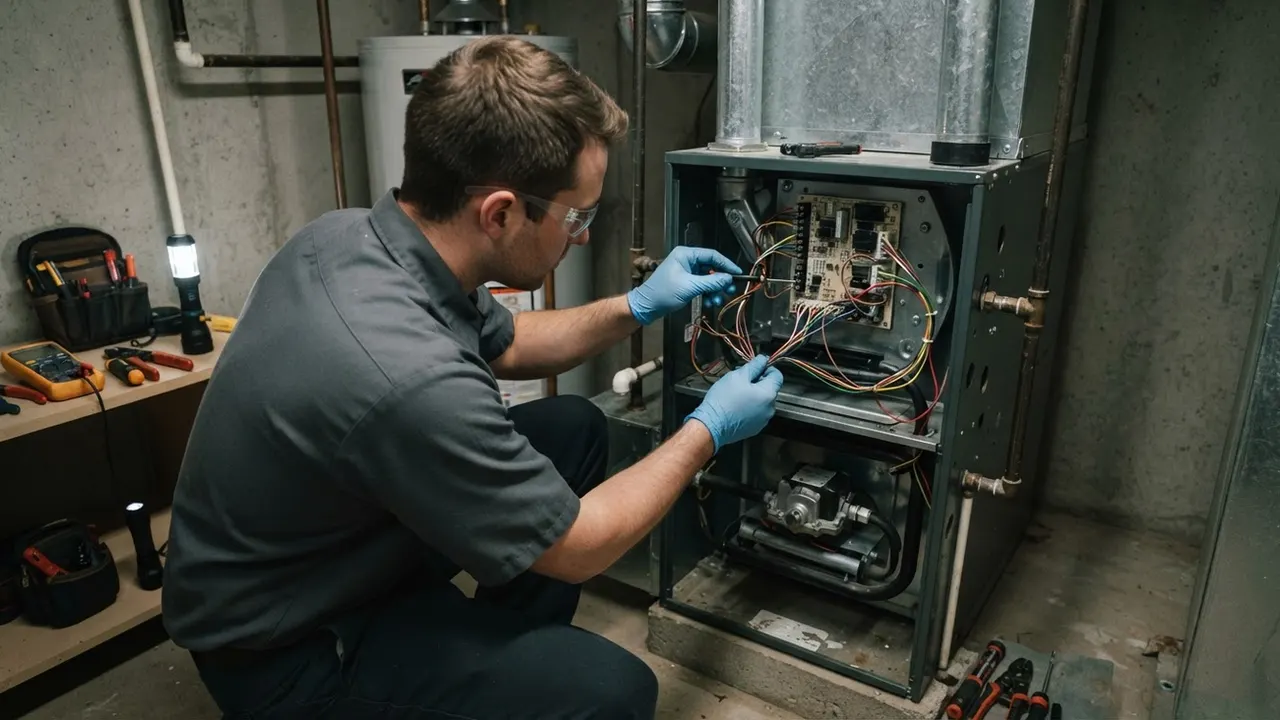
Thermostat And Power Check
We confirm the call for heat and power supply reach the furnace.
A no-heat visit covers locating the cause, repairing it and measuring warm air afterward.
We confirm the call for heat and power supply reach the furnace.
We check the filter and airflow because restriction is a top cause of heat shutdowns.
We test the part that makes heat, ignition on gas or elements on electric.
We check safety limits and controls that can shut heat off.
We measure warm air at the registers after repair.
A furnace not heating is a furnace that is running or trying to run without delivering warm air to your rooms. The blower may be moving air while the burners stay off, or the burners may light but the heat never reaches the vents. In both cases, something between the thermostat and the registers has failed, and the job is finding which link broke.
Most causes fall into three groups. Airflow problems, like a clogged filter or a failing blower, keep heat from moving. Ignition problems, like a worn ignitor or a dirty flame sensor, keep heat from being made. Control problems, like a tripped limit switch, shut the heat off to protect the furnace. A heater repair in York call usually ends in one of these three, and we test them in the order that finds the answer fastest.
We follow the path of heat, from the thermostat through the burners or elements to the blower and registers.
Schedule
Call or book online — a real human picks up and confirms a 2-hour arrival window.
Diagnose
Licensed tech inspects on-site, then walks you through the cause and your options.
Fix
The job is completed to code and done right the first time — no shortcuts, no surprises.
Guarantee
Every job backed by a written workmanship warranty — and we stand behind it.
Digital multimeter
Tests ignitors, sensors, switches and elements to find failed parts.
Temperature probes
Measure supply and return air temperature to show whether the furnace is actually heating.
Manometer
Checks draft and pressure on gas furnaces that fail to ignite.
Airflow inspection
Checks filters and registers for restriction.
Heat path tracing
We follow heat from call to ignition to blower to register, so the break is found.
Temperature rise check
We compare return and supply air temperature to confirm the furnace adds heat.
Limit cause analysis
When a limit has tripped, we find why instead of just resetting it.
01
What we do: We test the heat-making stage and the airflow to find where heat is lost.
→ The house warms and holds temperature overnight.
02
What we do: We look for a sudden fault like a failed ignitor, sensor or element.
→ Full warm air returns.
03
What we do: We test airflow, burners and limits to find the restriction.
→ The furnace reaches the set temperature.
A furnace that stops heating in York County is rarely a convenient problem. Overnight lows during the long heating season mean a cold house gets uncomfortable within hours, so no-heat calls often come on the first hard cold snap of fall. At that point furnaces that sat idle all summer face their first real work, and a dirty sensor, a clogged filter or a weak ignitor can decide whether they start. We take no-heat calls from York and nearby areas and follow the same order each time, so the cause is found without guesswork. Many York County homes rely on furnaces that have run for years, which makes wear-related faults a common root cause.
York
No-heat calls in the city often involve furnaces with years of service behind them.
Springettsbury Township
Springettsbury Township homes call us when the first cold snap exposes a weak part.
West York Borough
West York Borough households reach us when heat stops overnight.
Cold overnight temperatures during heating season
A furnace failure becomes uncomfortable within hours, so quick diagnosis matters.
Idle summers
Dust and carbon can build up and stop ignition on the first cold day.
These are the no-heat problems we meet most in York homes.
Problem
The house keeps cooling while the furnace seems to be working.
Our Fix
We test ignition, burners or elements and the limit switch to find why heat is not produced.
Problem
A limit switch or sensor may be shutting heat off, and the underlying cause can damage the furnace.
Our Fix
We find what triggers the shutdown, often airflow or a sensor, and correct it.
Problem
Uneven heat can mean a weak blower or restricted airflow, reducing comfort.
Our Fix
We check the blower and airflow and repair what restricts heat distribution.
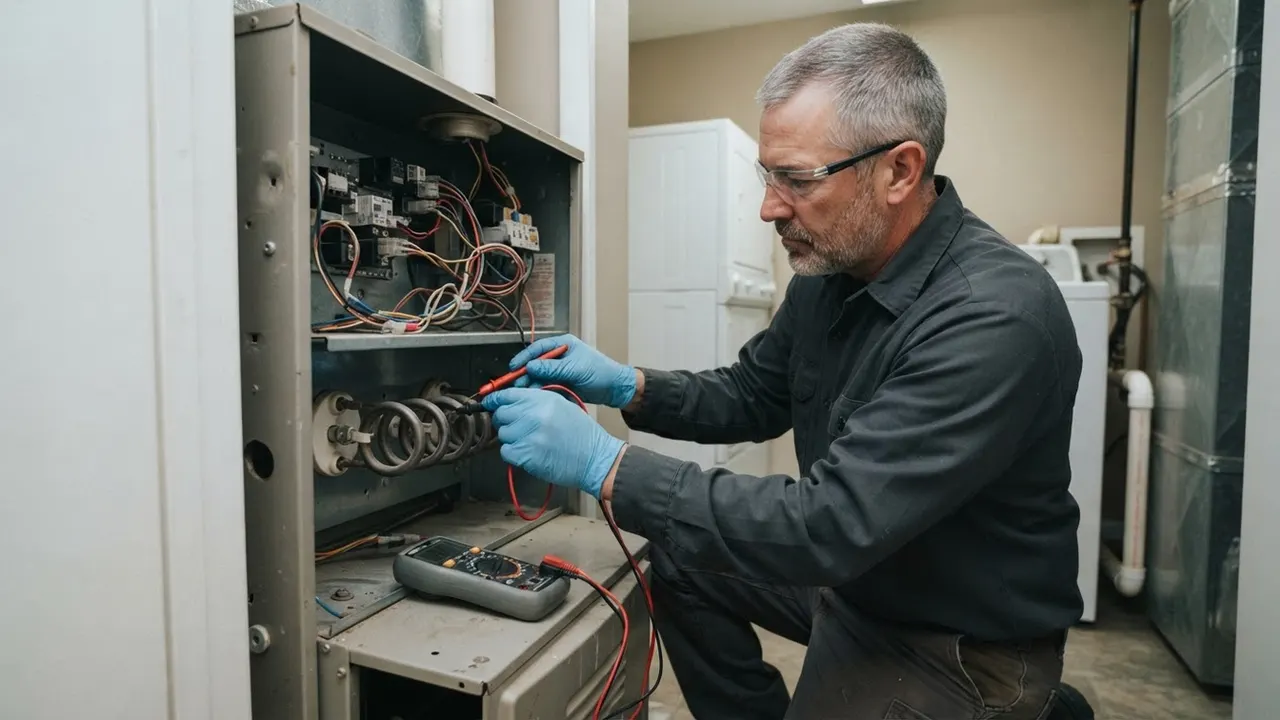
Finding the real reason your furnace is not heating is better than restarting it and hoping. Here is what a proper fix delivers.
Heat That Reaches The Rooms
We repair the stage that fails, then check air temperature at the registers. The measure of success is warm air in your rooms, not just a furnace that is running.
Lower Strain On The Furnace
A furnace that runs without heating works hard for nothing. Fixing the cause stops wasted run time and wear on the blower and controls.
A Cause You Can Trust
You get a clear explanation, whether it was airflow, ignition or a safety limit, so you know what to watch for in the future.
Fewer Return Visits
Fixing the cause instead of the symptom prevents the same no-heat problem from returning next week.
The cost of fixing a furnace that will not heat depends on the cause. A filter or sensor cleaning is a small job, while a blower motor or control board costs more. We diagnose first so you pay for the real problem.
What changes the price
The cause of no heat
Airflow and sensor problems are less costly than motor or board failures.
Gas or electric
Each type fails differently, affecting the repair.
Furnace age
Older furnaces may need harder-to-find parts.
Urgency
Freezing nights make a no-heat call urgent.
No-heat diagnosis is a routine part of our work. Because we see the same causes repeatedly, we know which ones to rule out first and which signs point to a more serious fault.
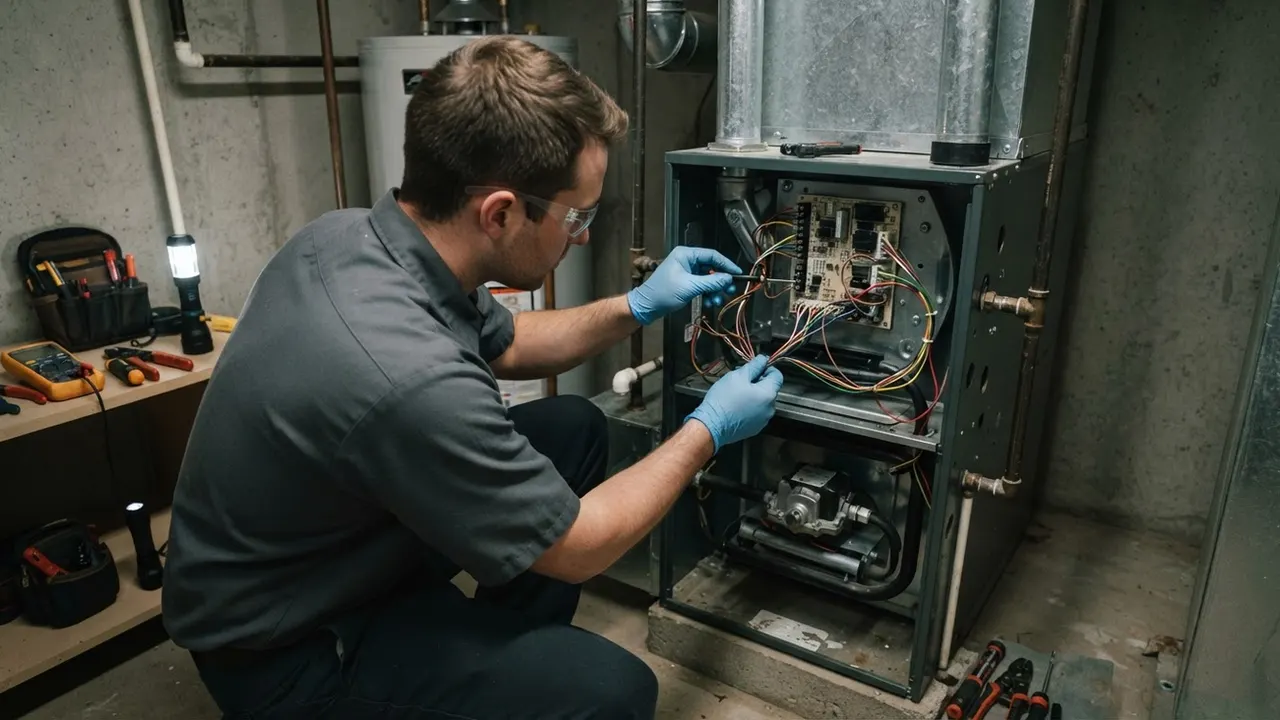
Real answers to the questions we hear most often from local homeowners and property managers.
If your vents blow cold specifically, this page covers causes of cold air during a heating call.
View Furnace Blowing Cold AirThese small parts are a top cause of gas furnaces that try to heat and fail.
View Furnace Ignitor and Flame Sensor RepairA failing blower can leave heat trapped in the furnace and rooms cold.
View Furnace Blower Motor RepairA furnace that heats briefly then shuts off is a close cousin of one that does not heat.
View Furnace Short CyclingCall (717) 276-7978 to talk about your furnace. Tell us whether it is gas or electric and what you notice: no heat, cold air, noise or constant restarts. We serve York and nearby communities in York County, Pennsylvania.
Phone
(717) 276-7978Address
York, PA
Hours
Mon–Fri: 7AM – 7PM
Sat: 8AM – 4PM
Sun: Emergency Only
24/7 Emergency Available