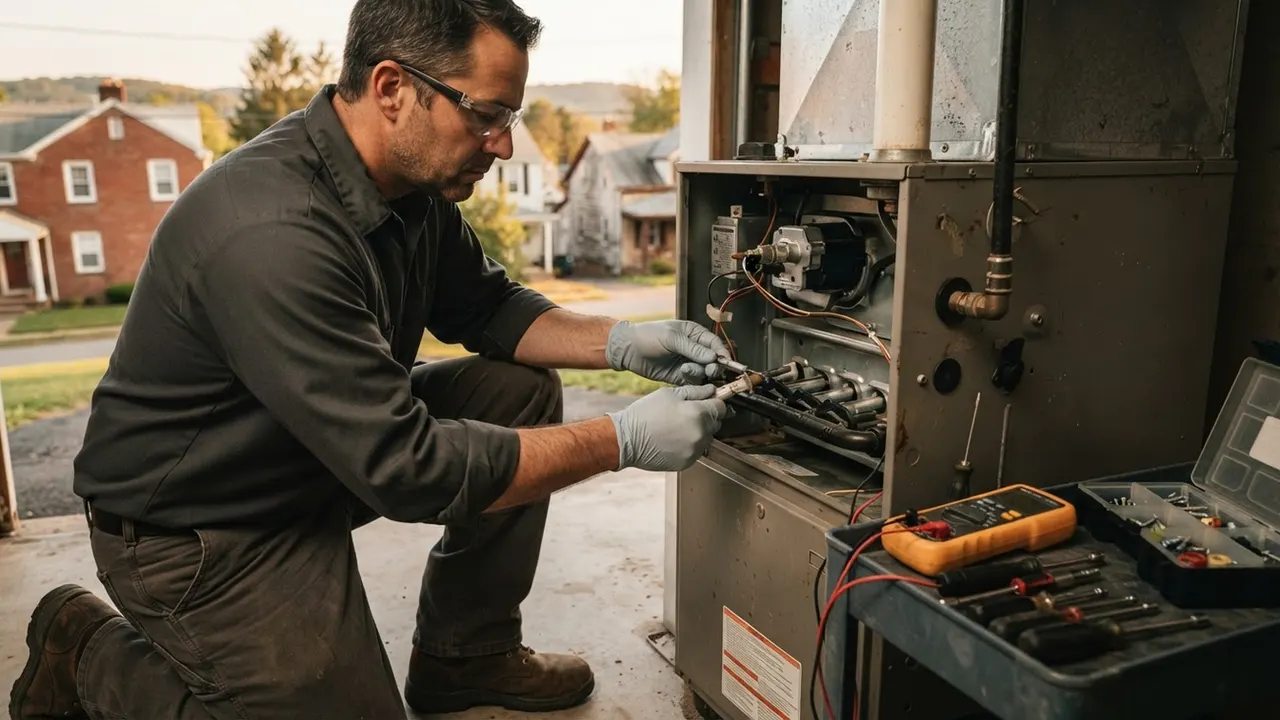
A furnace can leak carbon monoxide when its heat exchanger is cracked, its flue is blocked or it burns fuel incompletely, and you cannot see or smell it. The only dependable warning is a working carbon monoxide alarm. This post explains the signs that point to a problem, what causes high carbon monoxide from a furnace, and the steps that keep a York home safe during a long heating season.
What Is Carbon Monoxide and Why Does a Furnace Make It?
Carbon monoxide is a colorless, odorless gas produced when fuel burns without enough oxygen, and a gas furnace makes a small amount of it as part of normal combustion. A healthy furnace sends that gas safely outside through its flue. Trouble starts when something lets the gas into your living space.
Because you cannot sense it, carbon monoxide poisoning is easy to miss. That is why the U.S. Consumer Product Safety Commission recommends carbon monoxide alarms and yearly checks of fuel-burning heating systems.
How Do I Know If My Furnace Is Leaking Carbon Monoxide?
The only reliable way to know is a working carbon monoxide alarm, because the gas has no smell, color or taste. Other warning signs can point to a problem with the furnace, but none of them proves a leak and none replaces an alarm.
- Soot or dark staining around the furnace or vent pipe
- A yellow or orange burner flame instead of a steady blue one
- Excess moisture or condensation on windows near the furnace
- A pilot light that keeps going out
- A stuffy, burning or unusual smell when the furnace runs
If you notice any of these, turn the furnace off and have it inspected before you run it again. Do not wait for symptoms. Our page for Gas Furnace Repair in York explains what we check on a gas furnace.
What Would Cause High Carbon Monoxide From a Furnace?
High carbon monoxide from a furnace is usually caused by a cracked heat exchanger, a blocked or damaged flue, or incomplete combustion from dirty burners or poor airflow. Each lets either more gas form or lets it escape into the house.
- A cracked heat exchanger. The metal wall that separates combustion gases from your air develops a crack, often from age or repeated overheating.
- A blocked flue or vent. A nest, debris, ice or a collapsed vent pipe stops exhaust from leaving.
- Dirty or misadjusted burners. Dust, rust or the wrong gas pressure causes incomplete burning.
- Restricted airflow. A clogged filter makes the furnace run hot, which stresses the heat exchanger.
- Other fuel-burning appliances. A water heater, fireplace or gas dryer can also be the source.
Old age matters here. Furnaces in the 15 to 20 year range are more likely to have heat exchanger problems, which is why the repair-or-replace question and the safety question are closely tied. If your furnace is in that range and keeps needing attention, our page on Heater Repair in York explains what we look at first.
How Do I Know If My Furnace Is Making Me Sick?
The signs are headache, dizziness, weakness, nausea, confusion and chest pain, and the key clue is that they get worse when the furnace runs and ease when you go outside. These symptoms look like the flu, but with carbon monoxide, everyone in the house and any pets often feel unwell together.
Other clues include symptoms that fade when you leave home and return when you come back, or symptoms that start soon after the furnace comes on for the season. If you feel this way, get outside to fresh air first, then call 911. Do not stay inside to investigate.
Is It Safe to Sleep in the Same Room as a Furnace?
It can be safe if the furnace is in good working order, properly vented and backed by working carbon monoxide alarms. A furnace in a closet or utility area next to a bedroom is common, and a healthy one vents its exhaust outdoors.
The risk is a furnace that is damaged, poorly maintained or blocked. If your furnace is near sleeping areas, make sure alarms are installed outside every sleeping area, test them monthly and have the furnace inspected each year. Never use an oven or a portable fuel-burning heater as a substitute for a furnace.
What to Do If Your Carbon Monoxide Alarm Sounds
If a carbon monoxide alarm sounds, get everyone, including pets, outside into fresh air right away, then call 911 from outside. Do not stop to open windows or find the source. Wait for emergency responders to say the house is safe.
- Move everyone outside immediately.
- Call 911 from outside.
- Do not reenter until responders say it is safe.
- Do not restart the furnace.
- Have the furnace inspected by a professional before using it again.
Call us only after the home has been cleared. We will inspect the furnace for the cause. If you live in Hanover and the alarm sounded, you can read how we take calls on our Furnace Repair in Hanover page.
Carbon Monoxide Alarms: Where and How
Install a carbon monoxide alarm on every level of your home and outside each sleeping area, following the manufacturer's instructions for height and placement. Test each alarm monthly and replace batteries as the manufacturer directs.
Alarms wear out. Most carry an end-of-life date or signal, often somewhere between 5 and 10 years, so check the label and replace expired units. Plug-in and battery backup models help if the power fails, which often happens during a winter storm, exactly when your furnace or a generator is running hard.
How a Furnace Inspection Helps
A furnace inspection checks the heat exchanger, burners, flue and combustion for the problems that lead to carbon monoxide. We look for cracks, rust, soot, blocked venting and signs of poor combustion, and we test the furnace through a full heating cycle.
A yearly inspection, ideally in the fall before heating season, is the best way to catch trouble early. Read more on our page for Furnace Inspection and Tune-Up in York.
Common Mistakes
- Relying on smell. Carbon monoxide has none. Natural gas has an added odor, but that is a different warning.
- Silencing an alarm and carrying on. A sounding alarm means leave first, then investigate.
- Skipping the yearly inspection. Many problems show up long before they become dangerous.
- Blocking the vent or the air intake. Snow, storage or insulation near the furnace can choke it.
- Using a stove or oven for heat. This is a serious carbon monoxide risk.
When to Call a Professional
Call us for a yearly inspection, for soot or a yellow flame, or after any alarm once emergency responders have cleared your home. Furnace Repair York Pros checks the heat exchanger, burners and venting, tells you plainly what we find and will not run a furnace that is unsafe.
If an alarm is sounding right now, leave the house and call 911 first.
Frequently Asked Questions
Can a clean, newer furnace still leak carbon monoxide?
It is less likely but possible. A blocked vent, a damaged flue or another appliance can cause carbon monoxide even in a newer home. That is why every home with fuel-burning equipment needs working alarms.
How often should I test my carbon monoxide alarm?
Test it monthly using the test button, and follow the manufacturer's schedule for battery and unit replacement. If an alarm chirps, treat it as a real warning and check the label to see what the chirp means.
Does an electric furnace produce carbon monoxide?
No. An electric furnace burns no fuel, so it does not produce carbon monoxide itself. Other fuel-burning items in the home, such as a gas water heater or fireplace, can still produce it.
Should I turn off the furnace if I suspect a leak?
Yes. Turn it off, get everyone outside and call 911 if you have symptoms or an alarm is sounding. Do not run the furnace again until it has been inspected.
Get Help With Furnace Repair in York
If you want your furnace checked before the coldest weather, we will inspect it and tell you what we find.